LinkedIn’s AI “Experts”
(This article is a transcript in English of one of my french linkedIn posts)
AI experts are sprouting up on LinkedIn even as it becomes increasingly difficult to actually be one.
It's becoming harder to call oneself an expert because data roles are evolving into "super roles". They require more and more varied skills, and with innovation cycles becoming shorter, near-constant awareness is needed.
Take the Data Scientist - they increasingly need to develop ML Engineering and MLOps skills, while the Data Engineer is becoming more of what we call a Platform Engineer (also known as SRE or even Cloud Engineer). The sought-after profiles are increasingly well-rounded and the technologies increasingly numerous.
At the same time, we see many people on LinkedIn with no theoretical AI knowledge presenting themselves as "experts". These are often newcomers to the field who have learned to master consumer tools and become "super techies". While not questioning their self-taught skills, sometimes brilliantly executed, it seems risky to self-proclaim as an expert (because clearly they aren't) without a solid technical background.
On further reflection, I believe the majority are acting in good faith but simply do not realize "the extent of their ignorance".
Indeed, paradoxically it's often those who know the least who overestimate their knowledge. We can all remember a high school friend who after an exam thought they aced it only to be baffled by a 4/20 score. They simply lacked the minimal skills to gauge their true level.
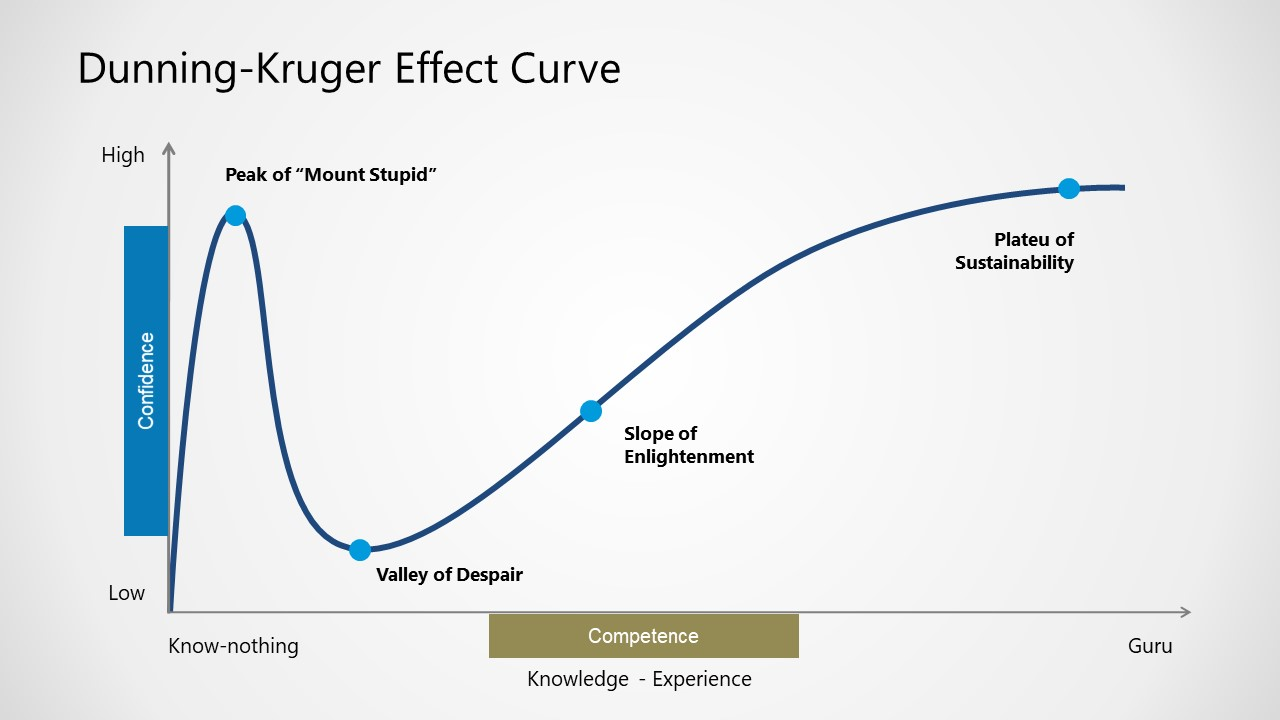
There's a term for this cognitive bias – the Dunning-Kruger effect. Étienne Klein likes to talk about Ultracrepidarianism.
According to Dunning and Kruger there are 3 phases in learning:
1/ Mount Stupid: you start in the field and quickly believe you're an ace.
2/ Valley of Humility: you realize the extent of your missing knowledge and tend towards imposter syndrome.
3/ Plateau of Consolidation: you develop a realistic assessment of your own skills.
The original 1999 Dunning-Kruger study has also had its share of criticism over time but I believe it still reflects a certain reality that can be verified in data.
As a result, I feel the term "expert" has been devalued. Today, when I see "AI Expert" instead of being reassured, I'm apprehensive from the outset.
In the end, this Confucius quote perfectly sums up this post: "True knowledge is knowing the extent of one's ignorance".
Do you know the extent of your ignorance? When do you think one can call themselves an expert? What does an expert look like versus a senior?